


18th Century Louis XV Style Kingwood Commode by Pierre Roussel
Additional photographs, measurements or a condition report — sent the same day. Call 305-975-0601.
If it is not as we described it, we make it right. Wrong dimensions, undisclosed damage, or any material misdescription — tell us within 7 days and we refund you in full, pay the return shipping, and charge no restocking fee.
- White-glove freight, quoted per order, room of choice
- In stock in Miami — no transatlantic wait, no customs
- To the trade: 15% on everything
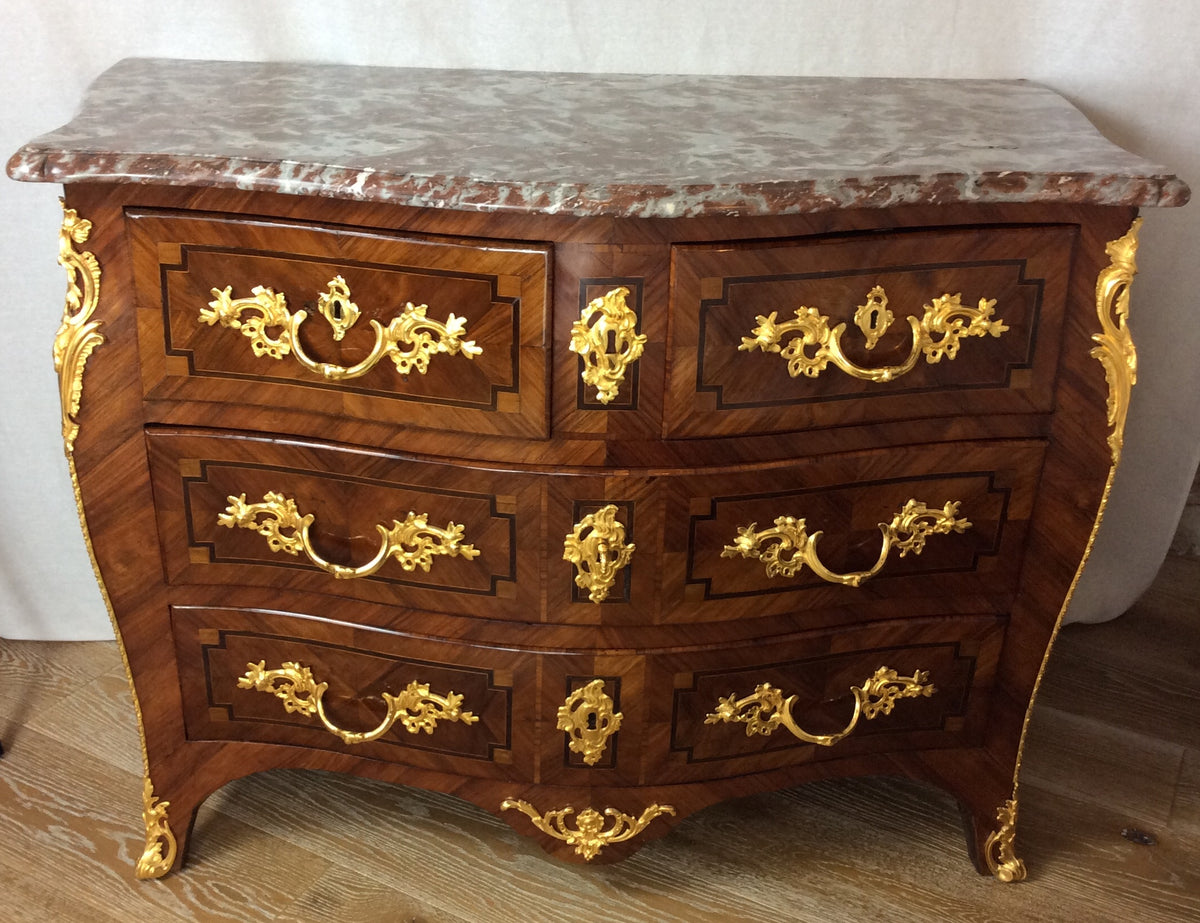
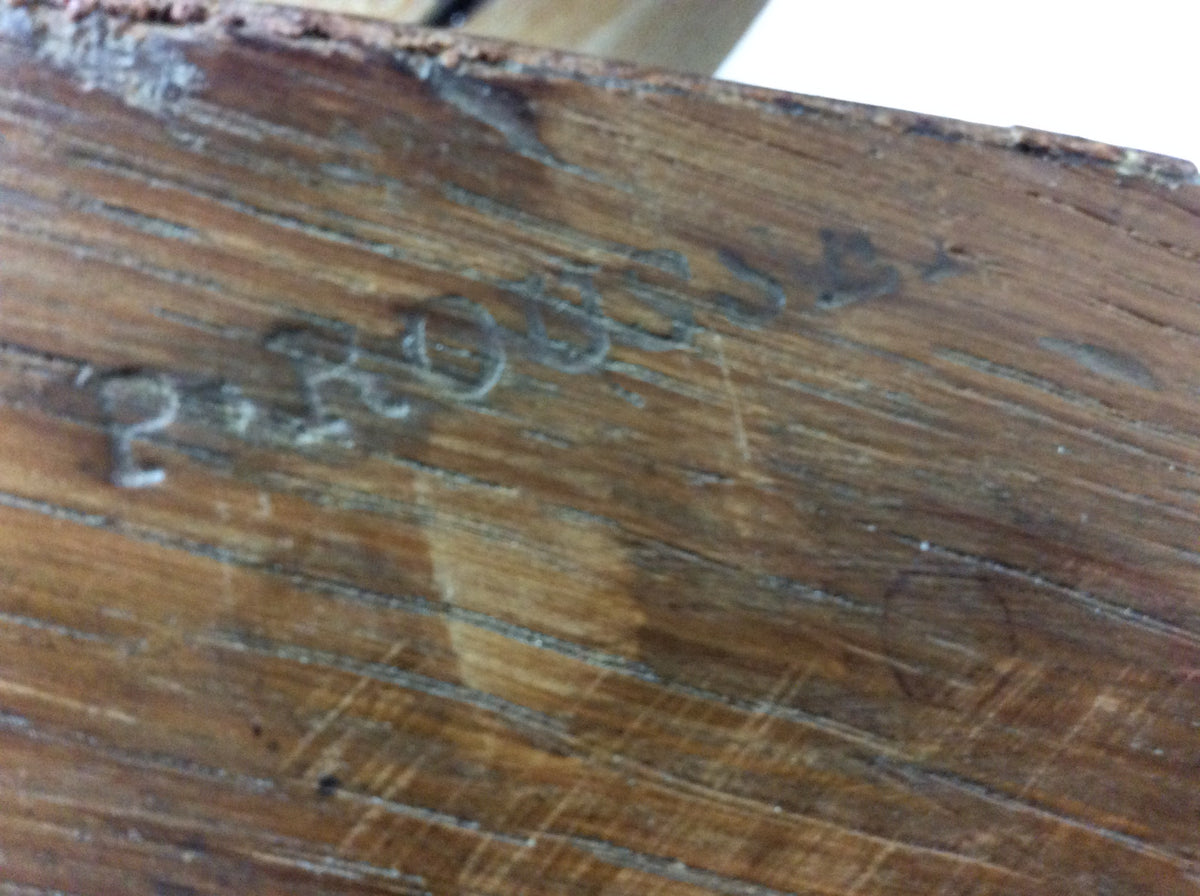
Important and very fine French Louis XV style commode or chest of drawers stamped P. Roussel. This commode, with its three rows of drawers, bears the Roussel maker’s stamp and is of characteristic rococo form.
Remarkable patina.
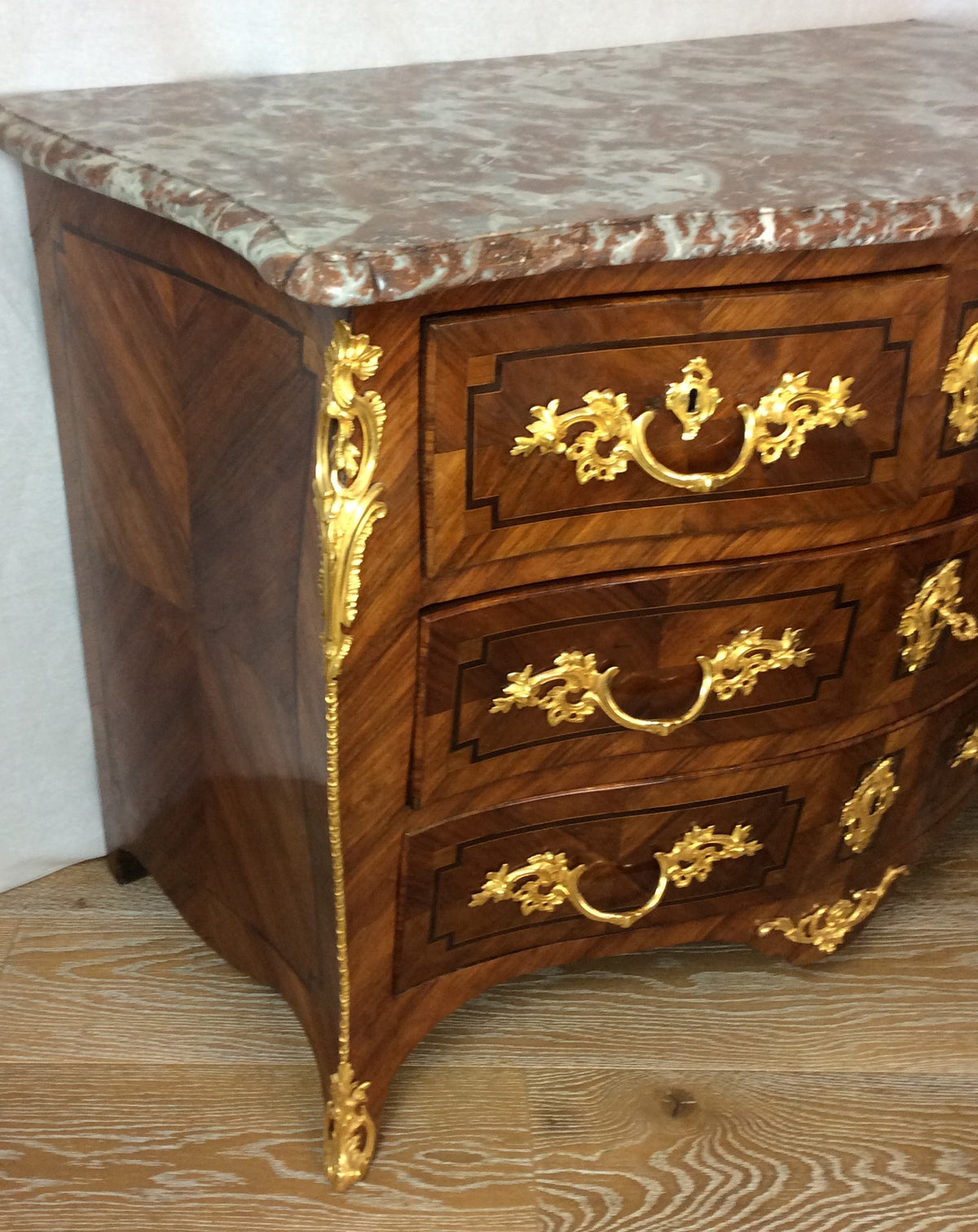
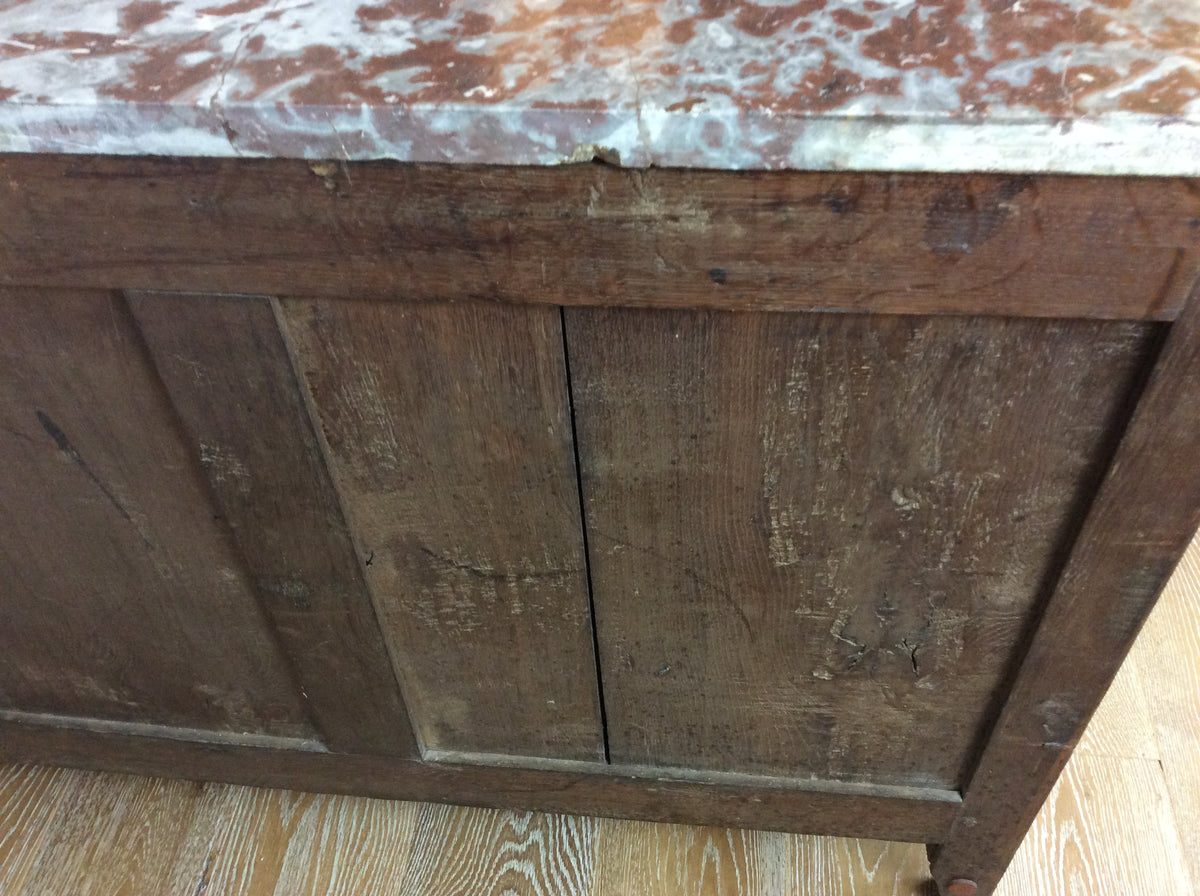
This very high quality 18th century Louis XV style commode with ormolu bronze mounts features its original marble top above a body of bombé shape, the whole inlaid with geometric marquetry. It is further decorated with ornate gilt bronze mounts for the drawer pulls, keyholes, hipped corners and dropped apron. Raised on cabriole legs with gilt bronze sabots, made with fine kingwood (bois de violette). Original lock and key. Four drawers with ample storage space for linens, clothing, or anything you choose to use it for.
Professionally restored at our own bench by Patrick Salaun, who trained at the École Boulle in Paris.
About Pierre Roussel. Pierre Roussel was born in Paris on 28 September 1723 and died there on 7 June 1782. He acquired his maîtrise on 21 August 1745, barely into his twenties, and rose through the guild to become juré in 1762 and syndic in 1780. He worked in the rue de Charenton, opposite the rue Saint-Nicolas, under the sign of the Image of Saint Peter — his own patron saint. Between 1775 and 1780 he received commissions from the Prince de Condé totalling some 10,000 livres for the Palais-Bourbon and the château de Chantilly, and he became one of the suppliers of the Court. Furniture stamped by him is held by the Petit Palais and the Musée Carnavalet in Paris, and by the Metropolitan Museum of Art in New York, whose example is an upright secretary of about 1775 to 1780.
What the stamp does and does not mean. Roussel ran at least three workshops, a store-room and a retail shop; he was a manufacturer and merchant as much as a craftsman, and the P. ROUSSEL punch functioned as a house mark. After his death in 1782 his widow, Marie-Antoinette Fontaine, continued to run the business and kept using her husband’s mark to sign the work of their sons, as the guild rules allowed. Most surviving stamped pieces are held to date from Roussel’s own lifetime, but the stamp identifies the house rather than a pair of hands, and we would rather set that out than imply more than it can carry.
Dimensions: 42 1/8 in Wide × 21 1/4 in Deep × 32 1/2 in High
Pierre Roussel
1723–1782, Paris
- Maîtrise
- 21 August 1745
- Guild
- Juré 1762 · Syndic 1780
- Workshop
- Rue de Charenton, Paris
- Patrons
- Prince de Condé; supplier to the Court
- Collections
- Petit Palais · Musée Carnavalet · The Metropolitan Museum of Art
Pierre Roussel was born in Paris on 28 September 1723 and died there on 7 June 1782. He acquired his maîtrise on 21 August 1745, barely into his twenties, and rose through the guild to become juré in 1762 and syndic in 1780. He worked in the rue de Charenton, opposite the rue Saint-Nicolas, under the sign of the Image of Saint Peter — his own patron saint.
Between 1775 and 1780 he received commissions from the Prince de Condé for the Palais-Bourbon and the château de Chantilly, and he became one of the suppliers of the Court. Furniture stamped by him is held by the Petit Palais and the Musée Carnavalet in Paris, and by the Metropolitan Museum of Art in New York, whose example is an upright secretary of about 1775 to 1780.
Roussel ran several workshops, a store-room and a retail shop; he was a manufacturer and merchant as much as a craftsman, and the P. ROUSSEL punch functioned as a house mark. After his death in 1782 his widow, Marie-Antoinette Fontaine, continued to run the business and kept using her husband’s mark to sign the work of their sons, as the guild rules allowed. Most surviving stamped pieces are held to date from Roussel’s own lifetime, but the stamp identifies the house rather than a pair of hands, and we would rather set that out than imply more than it can carry.
Quoted per order, never estimated
Domestic freight
Every piece ships from our warehouse in Miami. Furniture travels white-glove with BMC International Freight, room of choice, subject to the carrier’s access at your address. Freight transit is typically 7–14 business days; we contact you to arrange a delivery window. Smaller pieces travel insured by ground courier.
International
We ship worldwide, quoted case by case. Tell us the piece and the destination and we will price crating, freight, insurance and customs handling for you.
Packing
Packed by hand. Fragile items are double-boxed with custom foam inserts. Glass and detachable elements are removed, packed separately and reassembled on arrival.
If something arrives damaged
Photograph the packaging and the piece before unpacking further, and contact us within 48 hours. We handle all freight claims directly and will arrange a resolution.
Returns
One day from delivery for a change of mind — buyer pays shipping and a 15% restocking fee. If the fault is ours, none of that applies: 7 days, full refund including your original shipping, we pay the return freight, no restocking fee. See our refund policy.
Notes on this piece
- On the attribution. Words such as “style of”, “manner of”, “attributed to”, “after” or “circle of”, and period-style labels such as “Louis XV style”, describe our informed opinion based on form, construction and materials. They are not a certification of authorship, and not a guarantee of investment value. Where authorship is documented, we say so plainly and name the evidence.
Request a shipping quote
We price the actual crate, the actual route, the actual service level, and send it before you commit.